
Town Hall Interview with Jahmal Miller and Daina Washington
By Doug Zanger
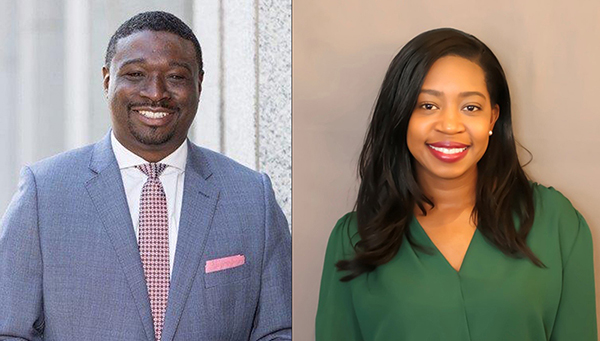 The past year has been a challenge on many levels. Professionally, marketing has managed to pivot all over the place, resulting in some distinct positives like rethinking the workplace. Yet, the pandemic has upended lives, and its effects remain in a perpetual “TBD” state, where stress and the emotional and mental health cost are yet to be fully understood.
In Black and brown communities, the challenge is much more acute. And the more recent and destructive rise of anti-Asian violence adds another urgent topic to address. According to Jahmal Miller, VP of Equity and Inclusion at CommonSpirit Health, the past year has brought new trauma that has surfaced historically destructive issues.
“We’ve experienced a dual pandemic of racial injustice and civil unrest, and Covid-19,” he said. “The level of trauma is not necessarily new for people of color, but we’ve had an opportunity to have a light shined on a lot of issues that we’ve experienced for hundreds of years. It’s allowed us an opportunity to start having some serious conversations about how we deal with the impact of racism, oppression and discrimination.”
Tomorrow (March 23), Miller joins Daina Washington, Hall & Partners group strategy director, for a critical ThinkLA conversation—DIG Safe Space: Impacting Change Town—about the disparities of mental health and wellness during the pandemic and how individuals and the marketing industry can become more positive forces. You can register here .
We caught up with Miller and Washington to understand what people will learn, how they can be strong allies, companies' responsibilities and more.
This interview has been edited for clarity and brevity.
What are some of the contexts people should understand in this conversation?
Washington: We need to talk about the disparities that exist, especially among minority communities, regarding mental health and wellness. But if you look at our industry, especially in Los Angeles, it’s a large community of entertainment and advertising people. There are long hours and a lot of stress. With everything that happened in 2020, with Black Lives Matter, it allowed people who aren’t Black or brown to get a glimpse into the daily stresses and the things that we carry in addition to that, like microaggressions and daily news stories.
Miller: Mental health disparities and inequities—and mental illness—are not well understood, and many people don’t know how to handle it. There’s also a culture of stigma. I’m excited to talk to this audience because there's a great opportunity for employers to do better by employees and an opportunity for partners in non-health spaces to help in messaging and changing the narrative on how normal [mental wellness] should be.
We’re well past the “working through it” conversation, right?
Washington: We have to be able to recognize our trauma and what we’ve experienced, and what we’re living through. It’s not sustainable to think that you can continue to live and work through this. That was the narrative in previous generations. It's important for us to take care of our mental health and recognize when a toxic environment is just not ok. And to be able to be ok with moving away from that.
What are some of the responsibilities of corporations and companies now?
Miller: [Companies] need to cultivate and curate, not just a safe place, but a healthy, functional environment where people feel like they belong, their voices are being heard, and they are not going to be penalized for doing the right thing—such as taking care of themselves and their family and taking time off and setting boundaries. Some of the best places to work now are recognized objectively for those who understand that. Making a social impact starts with their employees, and then they can go out to the communities to make an impact there. And also, companies are learning that it's good for business, too.
Washington: if you work in an environment where you feel like you can talk about mental health and wellness, that breeds happier, healthier employees. That's not something from previous generations, but you can start to sow the seeds moving forward. That way, people coming in after can recognize the importance of mental health and wellness because I feel like we've moved that way as a society in general.
What about allies? What can they keep doing to be a positive force?
Miller: The social construct of racism was not created by Black, brown or indigenous people. Those that are empowered and have privilege are generally white men. In our society, we have to constantly define racism and how it's impacted us—and we always have that burden. Allies have a responsibility, and many throughout my life and career played a significant role and impact. So I can speak favorably. Generally speaking, they’ve got to step up, be more vocal, and lean in, because to the extent that there's a bias or a blind spot—and things have been going on for decades and centuries—those in power say nothing or act like it doesn't exist. And that perpetuates the social construct of racism that continues to affect us today.
What do you want people to feel after participating in this session?
Washington: I want people to feel empowered to speak their truth within their organizations and honestly in their lives to make the right decisions concerning their mental health and well-being.
Miller: I agree. I would add that whether you're an individual entrepreneur or you work for a large corporate entity, it's important to ask how you can leverage resources and professional passion for affecting bold change in the space of mental health, diversity, equity and inclusion. We have to invest in and empower communities that have been exploited for far too long, but yet we say we value them.
Doug Zanger is a ThinkNW Board member and a long-time member and support of ThinkLA. He is Director of Brand Purpose Communications for The Martin Agency.