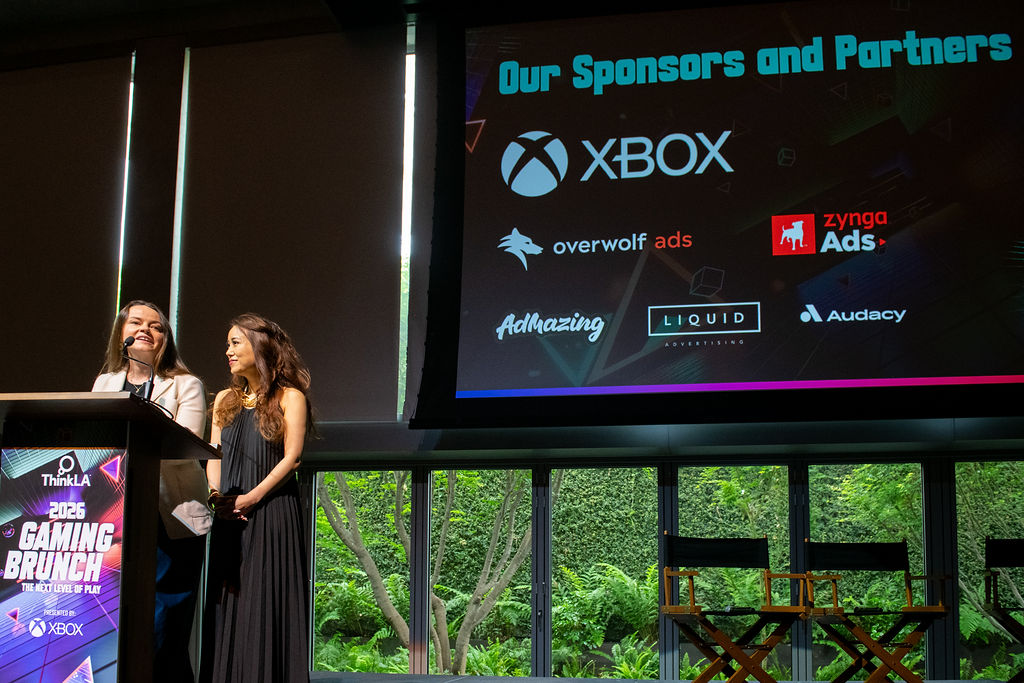
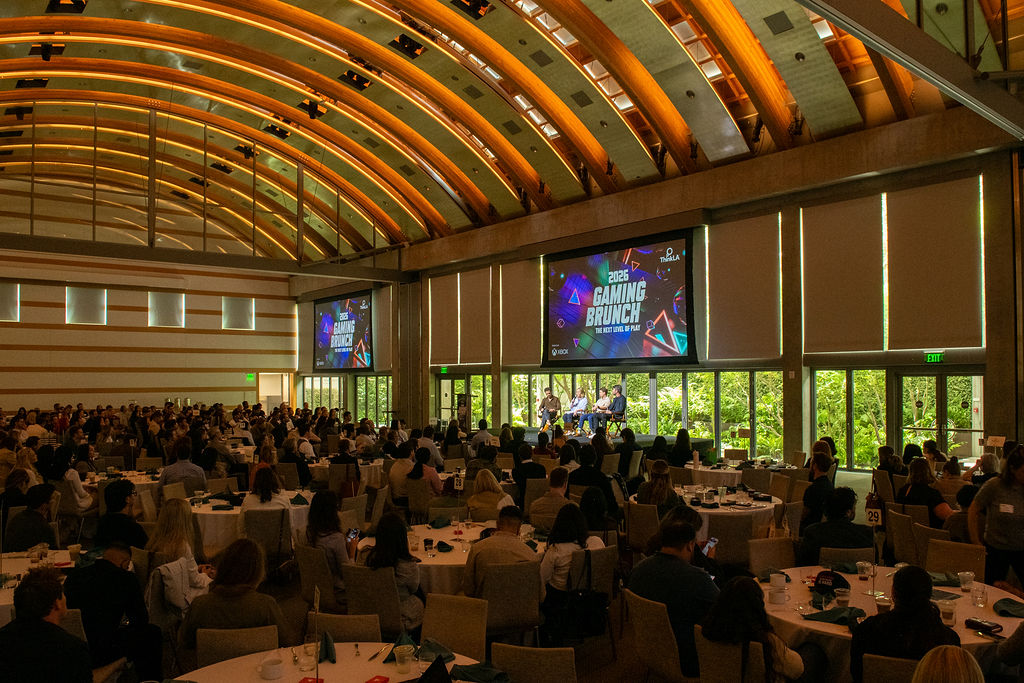
On May 14, 324 marketers and media professionals gathered at the Skirball Cultural Center for ThinkLA's 2026 Gaming Brunch, presented by Xbox Media Solutions. The morning brought together voices from brands, agencies, publishers, and research firms around a single premise: gaming is one of the most significantly underinvested advertising channels in the industry, and the window to act is now.
Here's what the room walked away with.
Everyone Plays. The Stereotype Is Wrong.
The morning opened with a keynote from Aubrey Quinn, SVP of Communications and Public Affairs at the Entertainment Software Association (ESA). Quinn shared an exclusive early preview of the 2026 Essential Facts About the U.S. Video Game Industry — a report that won't be released publicly until June 3.
The data dismantles the conventional picture of who a "gamer" is.
212.3 million Americans play video games regularly, that's 67% of the U.S. population, up three points from 2025. More than 75% of those players are over 18. Nearly half are older than 35. And for the first time, there are more gamers over 50 than there are under 18.
The gender split is nearly even. In every generation except the Silent Generation, at least 50% of women play video games — a reality that still surprises most marketers.
Mobile is the great equalizer. It's the most popular gaming platform across every generation and every gender. The image of a teenage boy on a console is not the audience. The audience is your customer.
Quinn also pushed back on the assumption that gamers are disengaged from the broader world. Male gamers 18+ are more likely than the general population to be employed full, time, to be voting in the 2026 election, and to have children. Female gamers tell a similar story. The demographic profile of the gaming audience is, in many ways, more attractive to advertisers than the stereotype would suggest.
The ESA keynote closed on three takeaways Quinn wanted the room to carry out: everyone plays, games are good, and there is a game for everyone.
The Ad Spend Gap Is Real and Growing
Jacob Bourne, Technology Analyst at EMARKETER, and Scott Bischoff, Media Lead at Black Bear Picutres led the morning's fireside conversation with a number that reframed the entire discussion.
Gaming captures comparable time spent to social video among U.S. adults. It receives one-tenth the ad dollars per minute.
That gap between audience attention and advertiser investment is the central opportunity in gaming right now. Brands are spending where the habits used to be, not where they are.
Bourne walked through several signals that suggest the channel is maturing fast. Console gaming skews younger and delivers highly engaged audiences, while mobile gaming's broader base skews older, making it ad-ready at scale. Rewarded ad impressions grew 54% year, over, year, driven largely by mobile gaming. At the same time, ad disruption is becoming a more acute pain point for players: the share of gamers who say ads interrupt their experience rose five percentage points between 2024 and 2025.
The implication is clear. The formats that respect the gaming experience rewarded, opt-in, integrated are growing. The ones that don't are losing ground. Brands entering the space now have the advantage of building the right way from the start.
From Players to Communities
The first panel, "From Players to Communities," explored how gaming audiences aren't just consumers; they're participants. The most valuable gaming communities aren't built around a product. They're built around shared identity, shared play, and shared culture.
Panelists discussed what it takes for brands to show up authentically in those spaces, and why the brands that try to parachute in without context rarely land. The conversation touched on the role of creators and streamers as community anchors, and how brands can support rather than interrupt the ecosystems they're trying to reach.
- Samantha Lim, SVP, Gaming Strategy and Innovation, Publicis Media
- Becky Li, Marketing Director, Annapurna Interactive
- Phillip Horlings, Director, Content, 2K
- Meena Mutha, Senior Director of Sales, Advertiser Solutions, Discord
Utilizing Data to Find Your Audience
The second panel, "Utilizing Data to Find Your Audience," got into the mechanics. With 212 million players across every demographic, gaming isn't a niche it's a targeting challenge. The question isn't whether your customer plays games. It's which games, on which platforms, and in what context.
Panelists covered the measurement frameworks brands are using to make gaming buys accountable, including how the IAB's 2025 Gaming Measurement Framework is beginning to create a common language between buyers and publishers. The session also addressed the question of brand safety, which remains one of the most cited reasons brands hesitate to enter the space.
Nathan Lindberg, VP of Brand Partnerships, Overwolf
Morgan Pomish, SVP, Head of Innovative Experiences, Digitas
Why Gaming? Making the Internal Case
The final panel, "Why Gaming?" was the one attendees rated highest of the three, and it's easy to see why. This is where the conversation got practical.
How do you bring a gaming strategy to a CMO who still pictures teenagers in basements? How do you build a test and learn case without a dedicated gaming budget? How do brands like Jack in the Box and Panda Express think about gaming as part of a broader cultural marketing strategy?
Panelists were direct about the internal work required. Gaming doesn't sell itself inside most organizations yet. But the data is increasingly hard to ignore, and the brands that have already committed are seeing results that make the next budget conversation easier.
- Todd Litchen, Head of Entertainment and Lifestyle Partnerships, Roblox
- Ryan Murray, Global Senior Director, Performance and Innovation, OMD
- Sheena Dougher, VP, Brand Marketing, Jack in the Box
- Scott Thornton, Media Director, Team One
The Takeaway
Gaming is not a future opportunity. It's a current one with 212 million Americans already there, more ad, receptive formats emerging every year, and a measurement infrastructure that's finally catching up to the scale of the audience.
The brands and agencies in that room on Wednesday aren't early anymore. But they're not late either. The window is open. The data is clear. The only question is whether your media plan reflects where the audience actually is.
Photo Album
Highlight Reel
Thank You to Our Sponsors and Partners
Presenting Sponsor

Roundtable Sponsor

Spotlight Sponsor

Espresso Cart Sponsor

Music Partner

Creative Partner